
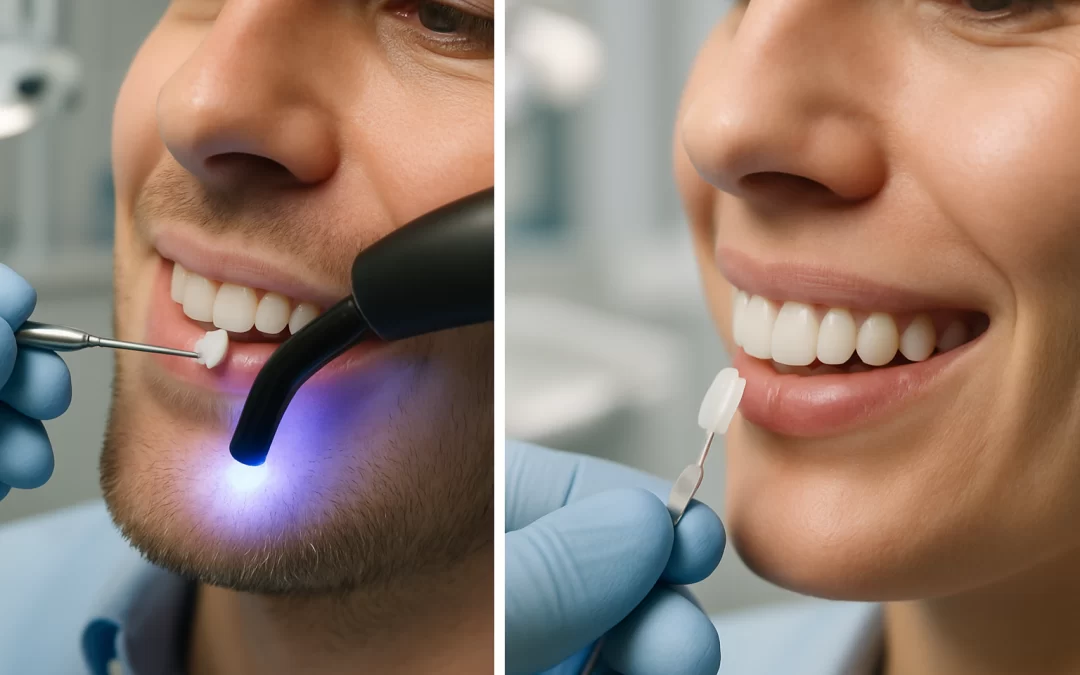
Veneers vs bonding: which is better? Veneers usually last longer, resist stains better, and create a more dramatic, “perfect” smile, but they cost more and require removing a thin layer of tooth enamel. Dental bonding is more affordable, quicker, and less invasive, but it is not as strong or long‑lasting and may stain or chip more easily. The best choice depends on your goals, budget, and the condition of your teeth. A cosmetic dentist can examine your smile and recommend the option that fits you best.
Many people compare veneers and bonding when they want to fix chipped, discolored, or uneven teeth. This guide explains both options in simple terms so you can feel more confident before speaking with a dentist. It is written for patients and families who may be new to cosmetic dentistry and want clear, honest information about cost, durability, appearance, and what to expect.
Table of Contents
- What Are Veneers and Dental Bonding?
- Who Is a Good Candidate for Veneers vs Bonding?
- Appearance and Results: How Do Veneers and Bonding Look?
- Durability and Longevity
- Procedure Steps: What Happens During Treatment?
- Comfort, Pain, and Recovery
- Cost Breakdown: Veneers vs Bonding
- Insurance Coverage and Payment Options
- Risks and Limitations of Veneers and Bonding
- Maintenance and Prevention Tips
- When to See a Dentist About Veneers or Bonding
- Frequently Asked Questions
- Summary: Which Cosmetic Dental Option Is Better?
What Are Veneers and Dental Bonding?
What are veneers?
Veneers are thin shells that cover the front surface of your teeth to change their color, shape, size, or length. They are usually made from porcelain or composite resin.
Veneers are custom-made in a dental lab to match your smile. They are bonded permanently to your teeth, so they become a long-term part of your smile. To learn more about material choices, you can read about the difference between porcelain vs. composite veneers.
What is dental bonding?
Dental bonding uses a tooth-colored resin (a plastic-like material) that is applied directly to the tooth, shaped, and hardened with a special light. It can repair chips, close small gaps, cover stains, and reshape teeth.
Bonding is done in the dental office in one visit and usually does not require removing much, if any, natural tooth structure. If you are especially interested in closing spaces, you may find it helpful to review how dental bonding can fix gaps, including pros, cons, and cost.
Common cosmetic problems veneers and bonding can fix
- Chipped or cracked front teeth
- Stubborn discoloration or stains that do not respond well to whitening
- Small gaps between teeth
- Teeth that are slightly crooked, uneven, or misshapen
- Teeth that are worn down or too small
Who Is a Good Candidate for Veneers vs Bonding?
Good candidates for veneers
You may be a good candidate for veneers if:
- Your teeth and gums are generally healthy (no untreated decay or gum disease).
- You want a long-lasting, dramatic change in your smile.
- You have multiple cosmetic concerns (color, shape, size, alignment).
- You understand that a thin layer of enamel will be removed and that veneers are not easily reversible.
Good candidates for bonding
Bonding may be better for you if:
- You have small chips, cracks, or gaps in one or a few teeth.
- You want a more budget-friendly option.
- You prefer a quick, one-visit solution.
- You want a reversible or minimally invasive treatment.
When veneers or bonding may not be recommended
- Severe tooth decay or gum disease that has not been treated.
- Very weak or heavily damaged teeth that may need crowns instead.
- Severe teeth grinding (bruxism) that could chip or break restorations.
- Unrealistic expectations, such as wanting “perfect” teeth without any maintenance.
Your dentist will examine your teeth, bite, and oral health to decide whether veneers, bonding, or another option is safest and most effective.
Appearance and Results: How Do Veneers and Bonding Look?
How veneers look
Porcelain veneers are known for their natural, lifelike appearance. They can be made to match your existing teeth or to create a brighter, more uniform smile.
Benefits of veneers for appearance include:
- Excellent color control and stain resistance.
- Ability to change tooth shape, size, and alignment in a single treatment plan.
- Very smooth, glass-like surface that reflects light similarly to natural enamel.
How bonding looks
Bonding can also look very natural, especially when done by an experienced cosmetic dentist. The dentist selects a resin shade that closely matches your tooth color and sculpts it to blend in.
However, bonding has some limitations:
- It may not reflect light as naturally as porcelain.
- It can stain over time from coffee, tea, red wine, or smoking.
- It may not be as smooth or as polished as veneers in larger or more complex cases.
Which looks more natural: veneers or bonding?
For small repairs, bonding can look very natural and is often hard to notice. For full smile makeovers or major changes, veneers usually provide a more consistent, high-end look.
The “best” appearance depends on your starting teeth, how many teeth are treated, and your goals. A cosmetic dentist can show you before-and-after photos of both options to help you visualize the difference.
Durability and Longevity
How long do veneers last?
With good care, porcelain veneers often last 10–15 years or longer. Composite veneers may last around 5–7 years.
Veneers are strong and resist staining, but they are not indestructible. Biting on hard objects (ice, pens, fingernails) or grinding your teeth can chip or crack them. For more details on long-term expectations, see are veneers permanent and what to expect long term.
How long does bonding last?
Dental bonding typically lasts about 3–7 years, depending on the size of the repair, your bite, and your habits. Smaller bonding repairs may last longer than larger ones.
Bonding is more likely than veneers to:
- Chip or wear down over time.
- Stain or discolor, especially if you smoke or drink dark beverages often.
- Need touch-ups or replacement sooner.
Which is more durable overall?
Veneers are generally more durable and longer-lasting than bonding. They are better suited for patients who want a long-term solution and are willing to invest more upfront.
Bonding is durable enough for many small cosmetic issues but is usually considered a medium-term solution rather than a lifetime fix.
Procedure Steps: What Happens During Treatment?
Veneers procedure steps
The veneer process usually takes two or more visits:
- Consultation and planning: Your dentist examines your teeth, discusses your goals, and may take photos, X-rays, or digital scans.
- Tooth preparation: A thin layer of enamel (often less than a millimeter) is gently removed from the front of the teeth to make room for the veneers.
- Impressions or scans: The dentist takes molds or digital scans to send to a dental lab, where your custom veneers are made.
- Temporary veneers (sometimes): Temporary coverings may be placed while the lab creates your permanent veneers.
- Bonding the veneers: At a second visit, the dentist checks the fit and color, then bonds the veneers to your teeth with a strong dental cement and cures it with a special light.
Bonding procedure steps
Dental bonding is usually completed in a single visit:
- Shade selection: The dentist chooses a resin color that matches your natural teeth.
- Tooth preparation: The tooth surface is cleaned and lightly roughened; a conditioning liquid is applied to help the bonding material stick.
- Applying the resin: The dentist places the soft resin on the tooth and shapes it to the desired form.
- Hardening: A special curing light is used to harden the resin.
- Finishing touches: The dentist trims, shapes, and polishes the bonded area so it blends with your natural tooth.
Time in the chair
- Veneers: Usually 2–3 visits over a few weeks; each visit may last 60–120 minutes, depending on how many teeth are treated.
- Bonding: Often 30–60 minutes per tooth in a single visit.
Comfort, Pain, and Recovery
Does getting veneers hurt?
Most patients feel little to no pain during veneer preparation because the area is numbed with local anesthesia. You may feel pressure or vibration but not sharp pain.
After the appointment, some people notice mild sensitivity to hot or cold for a few days to a couple of weeks. Over-the-counter pain relievers are usually enough if needed, and sensitivity typically improves as your teeth adjust.
Does bonding hurt?
Bonding is usually very comfortable and often does not require numbing, especially for small cosmetic changes. If bonding is used to repair a deeper chip or near the nerve, your dentist may use local anesthesia for comfort.
Most patients return to normal activities immediately after bonding with no downtime.
Recovery and aftercare
- You can usually eat and drink soon after both procedures, once numbness wears off.
- Avoid very hard or sticky foods on treated teeth for the first day or two.
- Follow your dentist’s instructions about brushing, flossing, and any follow-up visits.
Cost Breakdown: Veneers vs Bonding
Average cost of veneers
Costs vary by location, dentist experience, and materials, but typical ranges are:
- Porcelain veneers: About $900–$2,500 per tooth.
- Composite veneers: About $400–$1,500 per tooth.
Because veneers are often used for several front teeth, the total cost can add up quickly. For patients planning a full smile makeover, it can be helpful to review overall smile makeover costs and what to expect to pay.
Average cost of dental bonding
Dental bonding is usually less expensive than veneers. Typical ranges are:
- Per tooth: About $150–$600, depending on the size and complexity of the repair.
Bonding is often a more budget-friendly option for fixing one or a few teeth rather than a full smile makeover.
Why veneers cost more than bonding
- Veneers require more planning, tooth preparation, and chair time.
- Porcelain veneers involve a dental lab and custom fabrication.
- They typically last longer, which can make them more cost-effective over many years.
Other cost factors
- Number of teeth treated.
- Type of material (porcelain vs composite).
- Location of the dental office and local cost of living.
- Experience and training of the cosmetic dentist.
- Any additional treatments needed, such as whitening, fillings, or gum treatment.
Insurance Coverage and Payment Options
Does insurance cover veneers?
Most dental insurance plans consider veneers a cosmetic procedure and do not cover them. In rare cases, partial coverage may be available if veneers are needed to restore a tooth after trauma or damage, but this is not common.
Does insurance cover bonding?
Insurance coverage for bonding depends on why it is being done. If bonding is used to repair a broken tooth, decay, or damage, some plans may cover part of the cost as a restorative treatment.
If bonding is done purely for cosmetic reasons (for example, to close a small gap or change the shape of a healthy tooth), it may not be covered.
Financing and payment plans
Many dental offices offer payment plans or work with third-party financing companies to make cosmetic treatments more affordable. These options can spread the cost over several months or longer.
If you are concerned about cost, it may help to review dental financing options and ways to pay for treatment without insurance stress before your consultation.
Risks and Limitations of Veneers and Bonding
Risks and limitations of veneers
- Irreversibility: Once enamel is removed for veneers, it does not grow back. You will likely always need some type of covering on those teeth.
- Chipping or cracking: Veneers can break if you bite hard objects or have a strong grinding habit.
- Sensitivity: Some people experience temporary sensitivity to hot or cold after the procedure.
- Replacement: Veneers will eventually need to be replaced, usually after 10–15 years or more.
Risks and limitations of bonding
- Shorter lifespan: Bonding usually does not last as long as veneers and may need more frequent repairs.
- Staining: The resin can stain more easily than porcelain, especially with dark foods and drinks or smoking.
- Chipping: Bonding material is more likely to chip or wear down, especially on biting edges.
General considerations for both options
- Neither veneers nor bonding treat underlying problems like tooth decay or gum disease; these must be addressed first.
- Good oral hygiene and regular dental visits are essential to protect your investment.
- Results depend heavily on the skill and experience of your cosmetic dentist.
Maintenance and Prevention Tips
Daily care for veneers and bonding
- Brush twice a day with a soft-bristled toothbrush and fluoride toothpaste.
- Floss daily around all teeth, including those with veneers or bonding.
- Use non-abrasive toothpaste to avoid scratching surfaces.
- Rinse with water after consuming staining foods or drinks.
Habits to avoid
- Do not bite or chew on ice, pens, fingernails, or hard candies.
- Avoid using your teeth as tools to open packages or bottles.
- Limit dark beverages like coffee, tea, and red wine, especially with bonding.
- If you smoke, consider quitting to protect both your restorations and your overall oral health.
Protecting your smile long-term
- Visit your dentist regularly for cleanings and checkups.
- If you grind or clench your teeth, ask about a night guard to protect veneers or bonding.
- Address any chips, cracks, or rough edges early before they worsen.
When to See a Dentist About Veneers or Bonding
Signs you should schedule a cosmetic consultation
- You feel self-conscious about chipped, stained, or uneven front teeth.
- Whitening alone is not improving deep discoloration.
- You have small gaps or minor alignment issues but do not want braces.
- You are considering a full smile makeover and want to understand your options.
When to seek care sooner rather than later
- A chipped or cracked tooth that is sharp or painful.
- Bonding or a veneer that has broken, loosened, or fallen off.
- New sensitivity, pain, or swelling around a treated tooth.
Choosing the right cosmetic dentist
Look for a dentist with experience in cosmetic procedures, before-and-after photos, and a clear explanation of your options. It can be helpful to review guidance on how to choose the right cosmetic dentist and what to expect before your visit.
Bring your questions, concerns, and budget range to your appointment so your dentist can tailor a plan that fits your needs.
Frequently Asked Questions
Is veneers or bonding better for front teeth?
For small chips or gaps in one or two front teeth, bonding is often a simple, affordable choice. For a full smile makeover or major changes in color and shape, veneers usually provide more consistent, long-lasting, and stain-resistant results.
Can I whiten my teeth after getting veneers or bonding?
Whitening treatments do not change the color of veneers or bonding material; they only affect natural tooth enamel. If you plan to whiten, it is best to do so before getting veneers or bonding so your dentist can match the new restorations to your lighter tooth shade.
Are veneers permanent?
Veneers are considered a long-term and largely irreversible treatment because a thin layer of enamel is removed. They will eventually need to be replaced, but with good care, porcelain veneers can last many years before that is necessary.
Can bonding be removed or reversed?
Yes, bonding is more reversible than veneers because it usually requires little or no enamel removal. The resin can be smoothed, repaired, or replaced if needed, making bonding a flexible option for patients who want less permanent changes.
Which is cheaper: veneers or bonding?
Bonding is generally much less expensive per tooth than veneers. However, veneers may be more cost-effective over time if you want a long-lasting, full smile makeover and are prepared for the higher upfront investment.
Can I combine veneers, bonding, and other cosmetic treatments?
Yes, many patients use a combination of treatments, such as whitening, bonding on a few teeth, and veneers on others, to achieve their ideal smile. Your dentist can design a customized plan and may suggest a staged approach to fit your budget and goals.
Summary: Which Cosmetic Dental Option Is Better?
Veneers and bonding can both improve your smile, but they serve slightly different needs. Veneers are usually better for long-lasting, dramatic changes across several teeth, while bonding is ideal for smaller, more affordable repairs.
The “better” option depends on your goals, budget, and oral health. A face-to-face evaluation with a cosmetic dentist is the safest way to decide, and asking the top questions about cosmetic treatments can help you feel prepared.
If you are thinking about changing your smile, schedule a consultation with a qualified dentist to discuss veneers, bonding, and any other options that may fit your situation. Bring your questions, photos of smiles you like, and an idea of your budget so you can work together on a realistic plan. Taking this first step can help you move toward a healthier, more confident smile in a safe and informed way.

Dr. Carter is a dental content contributor who focuses on explaining dental procedures, costs, and treatment options in clear, patient-friendly terms. His work is designed to help readers understand what to expect and how to make informed decisions about their oral health.
Content on DentalServices.us is created for educational purposes and is based on current dental guidelines and publicly available information. It is not a substitute for professional dental advice, diagnosis, or treatment.