
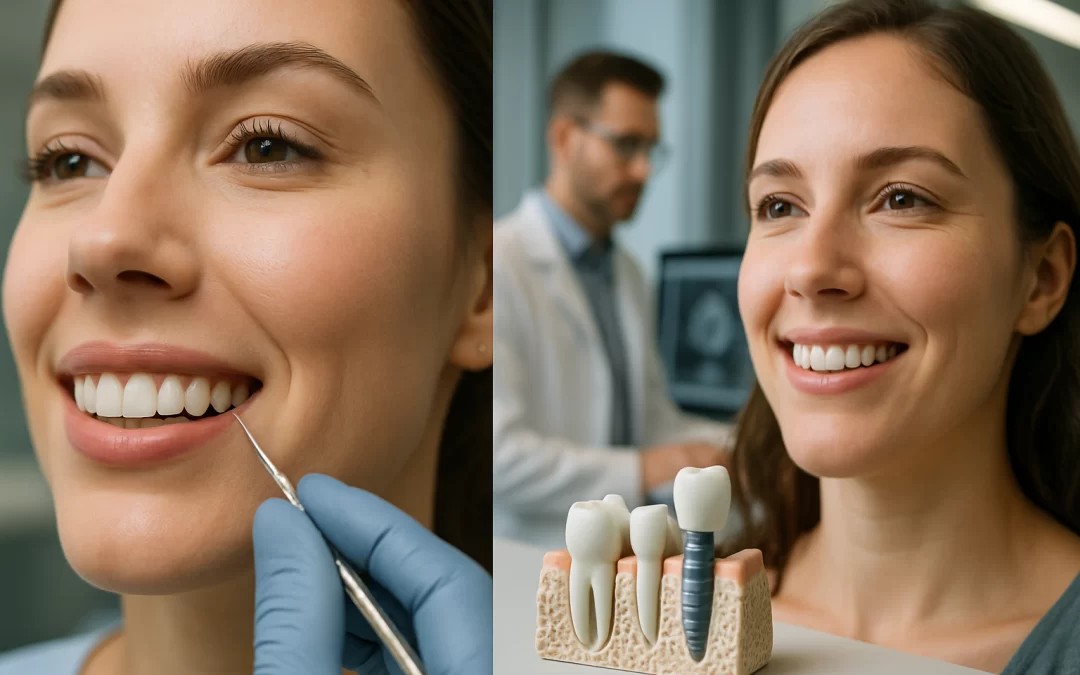
Dental implants and veneers are two very different treatments: implants replace missing teeth from the root up, while veneers cover the front of existing teeth to improve their appearance. Implants are usually best if you are missing teeth or have teeth that cannot be saved, and they tend to last longer but cost more and require surgery. Veneers are usually best if your teeth are healthy but chipped, stained, or slightly crooked, and you want a cosmetic upgrade with less invasive treatment. Neither option is right for everyone, and a dentist needs to evaluate your mouth, gums, and bite before making a safe recommendation.
Choosing between dental implants and veneers can feel confusing, especially when you are worried about cost, durability, and how your smile will look. This guide explains the key differences in simple terms so you can understand your options and feel more confident before talking with a dentist. It is designed for patients and families who want clear, trustworthy information—not dental jargon.
Table of Contents
- What Are Dental Implants and Veneers?
- Who Is a Candidate for Dental Implants vs Veneers?
- Procedure Steps: What to Expect With Each Option
- Pain, Healing, and Recovery Time
- Durability and How Long They Last
- Cost Comparison: Dental Implants vs Veneers
- Insurance Coverage for Implants and Veneers
- Risks and Limitations of Each Treatment
- Maintenance and Daily Care
- How to Choose: Is a Dental Implant or Veneer Right for You?
- When to See a Dentist About Implants or Veneers
- Frequently Asked Questions
- Summary: Key Takeaways
What Are Dental Implants and Veneers?
What is a dental implant?
A dental implant is an artificial tooth root, usually made of titanium, that is placed into your jawbone to replace a missing tooth. After it fuses with the bone, a connector (abutment) and a custom-made crown are attached on top, creating a replacement tooth that looks and functions like a natural one.
Implants can replace:
- A single missing tooth
- Several missing teeth in a row
- An entire arch of teeth (upper or lower jaw)
For more detail on single-tooth replacement, you can read about the single tooth implant procedure, cost, and recovery.
What is a veneer?
A veneer is a thin shell, usually made of porcelain or composite resin, that is bonded to the front surface of a tooth. Veneers are mainly cosmetic: they improve the color, shape, and alignment of teeth that are visible when you smile.
Veneers are typically used to:
- Cover deep stains that do not respond to whitening
- Hide chips, cracks, or worn edges
- Close small gaps between teeth
- Make slightly crooked teeth look straighter
Key difference: replacement vs. coverage
- Dental implants replace a missing or unsalvageable tooth from the root up.
- Veneers keep your natural tooth in place and only change the front surface.
If your tooth is missing or needs to be removed, a veneer is not an option; you would need a replacement such as an implant.
Who Is a Candidate for Dental Implants vs Veneers?
Who is a good candidate for dental implants?
You may be a good candidate for dental implants if:
- You are missing one or more teeth, or your teeth are badly damaged and cannot be saved
- Your gums are generally healthy (no uncontrolled gum disease)
- You have enough jawbone to support an implant, or you are willing to consider bone grafting
- You do not smoke heavily, or you are willing to cut back or quit
- You are in overall good health and can safely undergo minor oral surgery
People who wear dentures but want something more stable often consider implants. For full-arch solutions, options like All-on-4 dental implants may be recommended.
Who is a good candidate for veneers?
You may be a good candidate for veneers if:
- Your teeth are mostly healthy and intact (no severe decay or infection)
- You are unhappy with the color, shape, or minor alignment of your front teeth
- Your enamel is strong enough to support bonding
- You do not clench or grind your teeth heavily (or you are willing to wear a night guard)
Veneers are not suitable for teeth that are very weak, have large untreated cavities, or are loose due to gum disease. Those issues must be treated first, and in some cases the tooth may need a crown or extraction instead.
When implants are better than veneers
Implants are usually the better choice when:
- A tooth is missing or needs to be removed
- The root is badly infected or fractured
- You have significant bone loss in the area of a missing tooth and want a long-term solution
- You want to restore chewing strength and prevent bone loss in the jaw
When veneers are better than implants
Veneers are usually the better choice when:
- Your teeth are present and structurally sound
- Your main concern is appearance (color, shape, minor crowding or gaps)
- You want a faster cosmetic result without surgery
Procedure Steps: What to Expect With Each Option
Dental implant procedure steps
The implant process usually takes several months and happens in stages:
- Consultation and planning
The dentist or specialist examines your mouth, takes X-rays or 3D scans, and reviews your medical history. A treatment plan is created, including whether you need bone grafting. - Tooth extraction (if needed)
If the tooth is still present but cannot be saved, it is removed. Sometimes an implant can be placed the same day; other times, the area must heal first. - Implant placement surgery
Under local anesthesia (and sometimes sedation), the dentist places the implant post into the jawbone. Stitches may be used, and you go home the same day. - Healing and bone integration
Over 3–6 months, the bone grows around the implant in a process called osseointegration, anchoring it firmly in place. - Abutment placement
A small connector piece (abutment) is attached to the implant. The gums heal around it for a couple of weeks. - Crown placement
A custom crown is made to match your other teeth and is attached to the abutment. This becomes your new, permanent tooth.
For a deeper look at timelines and comfort, you can review how painful dental implants are and what to expect.
Veneer procedure steps
The veneer process is usually quicker and often completed in 2–3 visits:
- Consultation and smile design
The dentist discusses your goals, examines your teeth, and may take photos or digital scans. You review possible shapes and shades. - Tooth preparation
A very thin layer of enamel (often less than a millimeter) is removed from the front of the tooth to make space for the veneer. Impressions or scans are taken and sent to a lab. - Temporary veneers (sometimes)
Temporary coverings may be placed while the lab makes your permanent veneers. - Veneer bonding
At a second visit, the dentist checks the fit and color, then bonds the veneers to your teeth with a strong dental adhesive and cures it with a special light.
Pain, Healing, and Recovery Time
Pain and recovery with dental implants
Implant placement is a minor surgical procedure, so some discomfort is normal afterward. Most patients describe it as soreness or pressure rather than sharp pain.
Typical recovery timeline:
- First 24–72 hours: Swelling and mild to moderate soreness; managed with prescribed or over-the-counter pain medication.
- First week: Gradual improvement; soft foods recommended.
- 3–6 months: Bone integration period; usually no pain, but the implant is left undisturbed until fully healed.
Many people are surprised that the procedure itself is more comfortable than they expected, especially with good anesthesia and careful technique.
Pain and recovery with veneers
Veneer treatment is less invasive and does not involve surgery. Most patients feel little to no pain during the procedure because the teeth are numbed.
Afterward, you may notice:
- Temporary sensitivity to hot and cold
- Mild gum soreness around the treated teeth
- A short adjustment period as your bite and speech adapt
Most people return to normal activities the same day or the next day.
Durability and How Long They Last
How long do dental implants last?
Dental implants are designed as a long-term or even lifetime solution. With good care, the implant post itself can often last decades.
On average:
- The implant post can last 20+ years or longer
- The crown on top may need replacement after 10–15 years due to normal wear
Your personal habits (such as smoking, oral hygiene, and regular checkups) have a big impact on longevity. For more detail, see this guide on how long dental implants last.
How long do veneers last?
Veneers are durable but not permanent. Over time, they can chip, crack, or lose their shine, especially if you bite hard objects or grind your teeth.
Typical lifespan:
- Porcelain veneers: about 10–15 years with good care
- Composite veneers: about 5–7 years on average
Because some enamel is removed, veneers are usually a lifelong commitment: when they wear out, they must be replaced with new veneers or another type of restoration.
Cost Comparison: Dental Implants vs Veneers
Average cost of dental implants
Implants are more expensive upfront than veneers because they involve surgery, multiple visits, and custom parts. Costs vary by location, the dentist’s experience, and your specific needs.
Typical cost ranges in the United States (per area or tooth):
- Single dental implant (implant + abutment + crown): $3,000–$6,000 per tooth
- Multiple implants or bridges on implants: $6,000–$15,000 or more, depending on how many teeth are replaced
- Full mouth implant solutions: $20,000–$50,000+ per arch, depending on the system and materials used
For a deeper breakdown of full-mouth options, see the full mouth dental implants cost guide.
Average cost of veneers
Veneers cost less per tooth than implants but are still a significant investment, especially if you treat many teeth.
Typical cost ranges in the United States (per tooth):
- Porcelain veneers: $900–$2,500 per tooth
- Composite veneers: $400–$1,500 per tooth
A full “smile makeover” with 6–10 veneers can range from a few thousand dollars to well over $15,000, depending on how many teeth are treated and the materials used.
Long-term value comparison
- Dental implants: Higher upfront cost but often lower long-term cost if they last decades and prevent bone loss and shifting of other teeth.
- Veneers: Lower upfront cost per tooth but will likely need replacement one or more times over your lifetime.
The best choice depends on your dental health, goals, and budget—not just the initial price tag.
Insurance Coverage for Implants and Veneers
Insurance coverage for dental implants
Insurance coverage for implants varies widely. Many plans still consider implants a “major” or partially elective procedure, but coverage is improving.
Common patterns:
- Some plans cover part of the crown or abutment but not the implant post
- Some plans offer a fixed dollar amount toward implants instead of full coverage
- Medical insurance may help in special cases (such as trauma or certain medical conditions)
Always check your specific policy and ask your dental office for a pre-treatment estimate.
Insurance coverage for veneers
Veneers are usually considered cosmetic and are not covered by dental insurance. Exceptions are rare and usually limited to cases where a veneer is used to restore a tooth damaged by trauma or disease.
Because veneers are often an out-of-pocket expense, many offices offer payment plans or financing options.
Risks and Limitations of Each Treatment
Risks and limitations of dental implants
While implants have a high success rate, they are not risk-free. Possible complications include:
- Infection at the implant site
- Implant not integrating with the bone (implant failure)
- Nerve irritation or sinus issues (depending on location)
- Gum recession around the implant
Risk is higher in people who smoke heavily, have uncontrolled diabetes, or have untreated gum disease. A thorough evaluation and good home care greatly reduce these risks.
Risks and limitations of veneers
Veneers are less invasive but still have limitations and risks:
- Removal of enamel is permanent; the tooth will always need some type of covering
- Veneers can chip, crack, or debond, especially if you bite hard objects or grind your teeth
- Tooth sensitivity can occur, especially to hot and cold
- Gums can become irritated if veneers do not fit well or if oral hygiene is poor
Veneers also do not treat underlying problems like decay, infection, or severe misalignment. Those issues must be addressed first.
Maintenance and Daily Care
Caring for dental implants
Implants require the same daily care as natural teeth, plus careful attention to the gums around them.
Key steps:
- Brush twice daily with a soft toothbrush and fluoride toothpaste
- Clean between teeth and around the implant daily (floss, interdental brushes, or water flosser)
- See your dentist regularly for cleanings and checkups
- Avoid smoking and limit very hard or sticky foods on the implant area
Caring for veneers
Veneers also need good daily care to stay attractive and last as long as possible.
Key steps:
- Brush twice daily with a non-abrasive toothpaste
- Floss gently around veneered teeth every day
- Avoid biting on ice, pens, fingernails, or very hard foods with veneered teeth
- Wear a night guard if you grind or clench your teeth
- Limit staining foods and drinks if you have composite veneers, which can discolor more easily
How to Choose: Is a Dental Implant or Veneer Right for You?
Questions to ask yourself
Consider these questions when deciding between dental implants and veneers:
- Is my tooth missing, badly broken, or infected beyond repair?
- Are my main concerns cosmetic (color, shape, small gaps) or functional (chewing, missing teeth)?
- Am I willing to undergo surgery and a longer treatment timeline for a more permanent solution?
- What is my budget now, and what can I manage over the long term?
When implants are usually recommended
Your dentist is likely to recommend implants when:
- You have one or more missing teeth
- A tooth cannot be saved with a filling, crown, or root canal
- You want to protect your jawbone and prevent neighboring teeth from shifting
- You want a stable, long-term replacement that feels like a natural tooth
When veneers are usually recommended
Your dentist is likely to recommend veneers when:
- Your teeth are present and healthy but do not look the way you want
- You want a faster cosmetic improvement without surgery
- Your bite and alignment are good enough that only the front surfaces need improvement
Why a professional evaluation matters
No article can replace an in-person exam. X-rays, gum measurements, and a bite analysis are essential to decide safely between implants, veneers, or other options like crowns, bridges, or orthodontics.
A dentist or specialist can also show you before-and-after photos, explain realistic outcomes, and help you understand what your smile will look and feel like with each option.
When to See a Dentist About Implants or Veneers
You should schedule a dental visit if you:
- Have one or more missing teeth
- Have a tooth that is broken, painful, or has been recommended for extraction
- Are embarrassed to smile because of stains, chips, or gaps
- Notice loose teeth, bleeding gums, or bad breath that does not go away
Seek prompt care if you experience:
- Severe tooth or jaw pain
- Swelling in the face or gums
- Signs of infection such as fever or pus around a tooth
These may need urgent treatment before any cosmetic or implant work can be safely done.
Frequently Asked Questions
Are dental implants better than veneers?
Neither option is “better” in every situation—they serve different purposes. Implants are better for replacing missing or unsalvageable teeth, while veneers are better for improving the look of healthy teeth. The right choice depends on your dental health, goals, and budget.
Can veneers be placed on dental implants?
No, veneers are not used on implants. Implants are restored with crowns, bridges, or full-arch prostheses designed specifically to attach to the implant hardware. Veneers are only bonded to natural tooth enamel.
Is it painful to get dental implants or veneers?
Both procedures are done with local anesthesia, so you should not feel pain during treatment. Afterward, implants can cause a few days of soreness and swelling, while veneers may cause temporary sensitivity. Most people manage any discomfort with over-the-counter pain medication.
Do veneers ruin your natural teeth?
Veneers require removing a thin layer of enamel, which is permanent, so the tooth will always need some type of covering afterward. When done correctly and on the right candidates, veneers do not “ruin” teeth, but they are a long-term commitment that requires ongoing care and eventual replacement.
Can I get veneers if I have missing teeth?
Veneers cannot replace missing teeth because they need a natural tooth to bond to. If you have missing teeth, your dentist may recommend implants, bridges, or partial dentures, and veneers can sometimes be combined with these options for a complete smile makeover.
Which is more expensive overall: implants or veneers?
Per tooth, implants usually cost more upfront than veneers because they involve surgery and multiple components. However, implants often last longer and can be more cost-effective over many years, while veneers typically need replacement after 10–15 years.
Summary: Key Takeaways
- Dental implants replace missing or unsalvageable teeth and are a long-term, functional solution that also looks natural.
- Veneers keep your natural teeth and focus on improving appearance—color, shape, and minor alignment issues.
- Implants cost more upfront and require surgery and healing time, but they can last decades; veneers are less invasive and faster but usually need replacement over time.
- The right choice depends on whether your teeth are missing or damaged, your cosmetic goals, your health, and your budget.
The next step is a professional evaluation, including X-rays and a full exam, to see which option is safe and realistic for your situation.
If you are considering dental implants or veneers, schedule a consultation with a qualified dentist or specialist. Bring your questions, concerns, and budget so you can discuss all appropriate options and create a personalized treatment plan. Getting expert guidance now can help you avoid costly mistakes and move toward a healthier, more confident smile.

Dr. Carter is a dental content contributor who focuses on explaining dental procedures, costs, and treatment options in clear, patient-friendly terms. His work is designed to help readers understand what to expect and how to make informed decisions about their oral health.
Content on DentalServices.us is created for educational purposes and is based on current dental guidelines and publicly available information. It is not a substitute for professional dental advice, diagnosis, or treatment.