
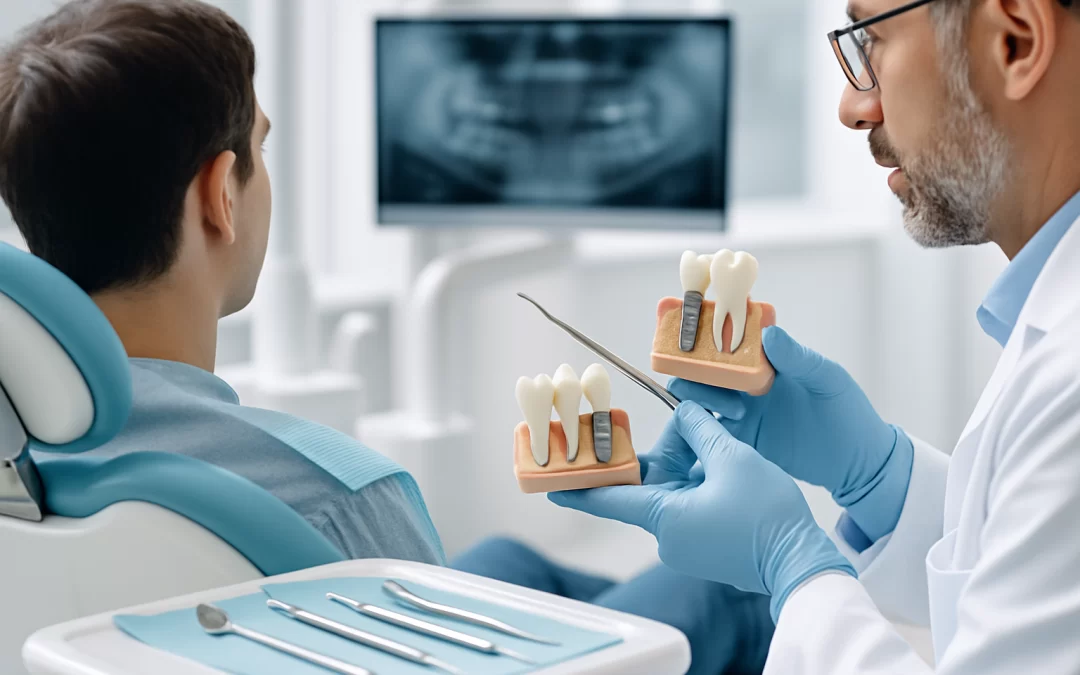
What Are Screwless Dental Implants? Procedure, Advantages, Risks, and Cost Breakdown
Screwless dental implants are a type of implant restoration where the visible tooth (crown) is attached to the implant with strong dental cement instead of a small screw. They can look very natural, feel comfortable, and avoid the small screw hole that some traditional implants have. However, they are not right for every patient, and in some cases a screw-retained implant crown is still safer or easier to repair. A thorough exam and 3D imaging are needed to decide which option is best for you.
Screwless implants are designed to replace missing teeth in a way that looks and functions like your natural teeth. This guide explains what they are, how the procedure works, what they cost, and when they may or may not be a good choice. It is written for patients and families who want clear, non-technical information before talking with a dentist or specialist.
Table of Contents
- What Are Screwless Dental Implants?
- Who Is a Candidate for Screwless Dental Implants?
- Screwless Dental Implant Procedure: Step-by-Step
- What to Expect: Pain, Healing, and Recovery Timeline
- Screwless Dental Implants Cost Breakdown
- Insurance Coverage for Screwless Dental Implants
- Advantages of Screwless Dental Implants
- Risks and Limitations of Screwless Dental Implants
- Care and Maintenance
- Prevention Tips: Protecting Your Implant Investment
- When to See a Dentist About Screwless Dental Implants
- Frequently Asked Questions
- Summary and Next Steps
What Are Screwless Dental Implants?
Basic definition
A dental implant has two main parts: the implant post in the bone and the crown that you see in your mouth. In many traditional systems, the crown is attached to the implant with a tiny internal screw. With screwless dental implants (also called cement-retained implant crowns), the crown is instead glued to a connector piece (abutment) using strong dental cement.
The implant post itself is still placed in the bone using a screw-like design. “Screwless” refers to how the crown is held in place, not to the implant post that goes into the jaw.
Screwless vs. screw-retained implants
Both screwless and screw-retained implants use a titanium or zirconia post in the jawbone. The difference is how the crown is attached:
- Screw-retained crown: A small screw passes through the crown into the implant. The access hole is covered with filling material.
- Screwless (cement-retained) crown: The crown is cemented onto an abutment that is attached to the implant.
Many dentists use both methods depending on the tooth location, bite, and how easy it will be to clean and repair the implant in the future.
When screwless implants are commonly used
- Front teeth where appearance is critical and a screw hole might be visible.
- Cases where the angle of the implant makes a screw hole come out on the front of the tooth.
- Situations where the dentist wants a very smooth, natural-looking crown surface.
For a deeper overview of how single implants work in general, including healing and timelines, you may find it helpful to review information on a single tooth implant procedure, cost, and recovery.
Who Is a Candidate for Screwless Dental Implants?
General implant candidacy
To be considered for any dental implant, including screwless restorations, you typically need:
- Good overall health and ability to heal.
- Healthy gums with no uncontrolled gum disease.
- Enough bone in the jaw to support an implant (or willingness to have bone grafting).
- No uncontrolled diabetes, heavy smoking, or other conditions that severely affect healing.
Specific factors for screwless crowns
Your dentist may recommend a screwless (cement-retained) crown if:
- The implant angle would make a screw hole show on the front of the tooth.
- You have a high smile line and cosmetic appearance is a top priority.
- There is enough space and gum thickness to safely remove excess cement.
On the other hand, a screw-retained crown may be better if you have a higher risk of gum problems, need very easy access for future repairs, or have complex full-arch implant work.
Who may not be ideal for screwless implants
- Patients with a history of gum inflammation around implants (peri-implantitis).
- People who grind or clench heavily, where future adjustments may be more likely.
- Cases where the crown margin would be very deep under the gum, making cement removal difficult.
Screwless Dental Implant Procedure: Step-by-Step
1. Consultation and planning
The process starts with a full exam, X-rays, and often a 3D scan (CBCT). Your dentist or specialist will:
- Check your gums, bone levels, and bite.
- Discuss your medical history and medications.
- Explain whether a screwless or screw-retained crown is better in your case.
A digital or physical impression of your teeth is usually taken to plan the implant position and the final crown.
2. Implant placement surgery
The implant post is placed into the jawbone under local anesthesia (numbing). Many patients describe pressure and vibration, but not sharp pain during the procedure.
- A small opening is made in the gum.
- The implant site is prepared in the bone.
- The titanium or zirconia implant is inserted and covered with a healing cap or the gum is closed over it.
In some cases, a temporary tooth may be placed the same day, especially in the front of the mouth, but this depends on bone quality and bite forces.
3. Healing and osseointegration
After placement, the implant needs time to bond with the bone, a process called osseointegration. This usually takes:
- About 3–4 months in the lower jaw.
- About 4–6 months in the upper jaw.
During this time, you may wear a temporary removable tooth or a temporary fixed restoration, depending on your case.
4. Abutment and impression for a screwless crown
Once the implant is stable, the dentist attaches an abutment, which is the connector between the implant and the crown. For a screwless crown:
- The abutment is usually screwed to the implant and tightened to a specific torque.
- An impression (mold) or digital scan is taken with the abutment in place.
- The dental lab designs a crown that will be cemented onto this abutment.
5. Cementing the final crown
At the final visit:
- The dentist checks the fit, color, and bite of the crown.
- A special implant-safe dental cement is placed inside the crown.
- The crown is seated onto the abutment and held in place while the cement sets.
- Excess cement is carefully removed from around the gums to reduce the risk of irritation.
Once the cement is set and the bite is adjusted, the tooth should feel solid and natural when you bite and chew.
What to Expect: Pain, Healing, and Recovery Timeline
Pain and discomfort
Most patients report mild to moderate soreness after implant surgery, similar to having a tooth removed. Over-the-counter pain medication is often enough, though some patients may receive a short prescription.
Discomfort usually improves significantly within 3–5 days. When the crown is cemented later, there is usually very little pain, just some temporary gum tenderness.
If you are concerned about discomfort, you may find it helpful to review more detailed information on how painful dental implants are and what to expect.
Typical healing timeline
- First 24–72 hours: Swelling and minor bruising are common. Soft foods and careful brushing are recommended.
- First 1–2 weeks: Gums heal around the implant site. Stitches (if used) may dissolve or be removed.
- 3–6 months: Bone fuses with the implant. You may have check-up visits to monitor healing.
- After crown placement: The tooth should feel normal within a few days as your bite adjusts.
Activity and diet
Most people can return to normal daily activities within 1–2 days after surgery, avoiding heavy exercise for a short time. A soft diet is recommended for the first few days, then you can slowly return to regular foods as you feel comfortable.
Screwless Dental Implants Cost Breakdown
Typical cost range
The total cost of a screwless dental implant (implant, abutment, and crown) in the United States often falls in a similar range to screw-retained implants. On average, you can expect:
- Per single implant with screwless crown: Approximately $3,000–$6,000 per tooth.
Costs vary widely based on location, the dentist’s training, materials used (titanium vs. zirconia, type of crown), and whether you need bone grafting or other preparatory procedures.
Cost components
- Consultation, exam, and imaging: $150–$500 (sometimes credited toward treatment).
- Implant placement surgery: $1,500–$3,000 per implant.
- Abutment (connector): $300–$800.
- Cement-retained crown: $1,000–$2,000 per tooth.
- Bone grafting or sinus lift (if needed): $300–$3,000+ depending on complexity.
Single tooth vs. multiple teeth
Replacing a single tooth with a screwless implant crown is usually more straightforward than full-arch or full-mouth implant work. For patients comparing options like multiple implants versus dentures, it can be helpful to review how dental implants compare with dentures long term.
Financing and payment options
Many dental offices offer:
- Monthly payment plans through third-party financing companies.
- In-house membership or discount plans for uninsured patients.
- Phased treatment to spread costs over time.
Always ask for a written treatment plan and cost estimate before starting care.
Insurance Coverage for Screwless Dental Implants
How dental insurance typically views implants
Many traditional dental insurance plans still consider implants (including screwless crowns) a “major” or sometimes “elective” procedure. Coverage can vary from no coverage at all to partial coverage of certain parts of the treatment.
What may be covered
- Portion of the crown cost, similar to a regular crown on a natural tooth.
- Some coverage for bone grafting if it is considered medically necessary.
- Annual maximums that limit how much the plan will pay per year (often $1,000–$2,000).
What may not be covered
- The implant post itself may be excluded or only partially covered.
- Upgrades in materials (such as all-ceramic crowns) may have extra out-of-pocket costs.
- Consultations and 3D scans may not be fully covered.
Because policies differ, it is important to:
- Ask your dental office to submit a pre-authorization or pre-estimate.
- Contact your insurance company directly to confirm coverage details.
- Check whether there are waiting periods or missing tooth clauses.
Advantages of Screwless Dental Implants
1. Aesthetics (appearance)
One of the main benefits of screwless implant crowns is their appearance. Because there is no screw access hole, the visible surface of the tooth can be completely smooth and natural-looking.
- Better color matching and translucency in front teeth.
- No risk of the filling material in a screw hole discoloring over time.
- More flexibility in shaping the crown for a natural smile line.
2. Comfort and bite
When properly designed, screwless crowns can feel very similar to natural teeth. The cement layer can help create a very precise fit between the crown and abutment.
- Stable, solid feel when chewing.
- Less chance of a screw loosening and causing movement or noise.
3. Flexibility in implant angle
If the implant must be placed at a slight angle due to bone limitations, a screwless crown can hide the angle better. The dentist can design the abutment and crown so the visible tooth looks straight, even if the implant is angled.
4. Suitable for many single-tooth cases
For many single missing teeth, especially in the front, a screwless crown is a common and predictable choice. It allows the dentist to focus on cosmetics while still providing strong function.
Risks and Limitations of Screwless Dental Implants
1. Cement-related gum irritation
The main concern with screwless (cement-retained) crowns is excess cement left under the gums. If any cement remains, it can irritate the tissues and increase the risk of inflammation or infection around the implant.
- Symptoms may include redness, swelling, bleeding, or tenderness.
- In severe cases, this can contribute to bone loss around the implant.
Experienced dentists use special techniques and cements to minimize this risk, but it cannot be completely eliminated.
2. More difficult to remove or repair
Because the crown is glued in place, removing it later can be more challenging than simply unscrewing a screw-retained crown. If the crown chips, loosens, or needs to be replaced, the dentist may need to:
- Cut a small access hole and convert it to a screw-retained style, or
- Carefully cut off the crown and replace it with a new one.
This can add time and cost to future repairs.
3. Not ideal for all full-arch or complex cases
For full-mouth or full-arch implant solutions (such as All-on-4 style treatments), many dentists prefer screw-retained bridges. These can be removed for cleaning and repair more easily, which is important when many teeth are connected together.
If you are considering full-mouth implants, it is helpful to understand broader options like All-on-4 dental implants and how they work or review a full mouth dental implants cost guide.
4. General implant risks
Regardless of whether the crown is screwless or screw-retained, all implants carry some general risks:
- Infection at the implant site.
- Failure of the implant to bond with the bone.
- Nerve irritation or sinus complications (depending on location).
- Long-term bone loss if oral hygiene is poor or smoking continues.
Choosing an experienced implant dentist and following all aftercare instructions can significantly reduce these risks.
Care and Maintenance
Daily home care
Screwless implant crowns should be cleaned just like natural teeth, with a few extra steps:
- Brush twice a day with a soft toothbrush and fluoride toothpaste.
- Use floss, interdental brushes, or special implant floss around the implant.
- Consider a water flosser to help clean around the gumline and under the crown edges.
Professional cleanings and check-ups
Regular dental visits are essential to keep implants healthy. Your dentist or hygienist will:
- Check the gums around the implant for signs of inflammation.
- Take X-rays periodically to monitor bone levels.
- Clean around the implant with tools designed to avoid scratching the surface.
Most patients benefit from professional cleanings every 3–6 months, depending on their risk level.
Protecting your implant
- Wear a nightguard if you grind or clench your teeth.
- Avoid using your teeth to open packages or bite very hard objects (like ice or pens).
- Address any new pain, swelling, or looseness around the implant promptly.
Prevention Tips: Protecting Your Implant Investment
Before you get an implant
- Treat any existing gum disease or cavities first.
- Quit smoking or reduce significantly, as smoking increases implant failure risk.
- Work with your medical doctor to control conditions like diabetes.
After implant placement
- Follow all post-operative instructions carefully.
- Keep the area clean but avoid aggressive brushing that could irritate the gums.
- Attend all scheduled follow-up visits to monitor healing.
Long-term prevention
- Maintain excellent daily oral hygiene.
- Limit frequent snacking on sugary or acidic foods and drinks.
- Use any prescribed mouth rinses if your dentist recommends them.
When to See a Dentist About Screwless Dental Implants
Before treatment
Consider scheduling a consultation if:
- You are missing one or more teeth and want a fixed, natural-feeling replacement.
- You are unhappy with a removable partial denture or bridge.
- You have been told you need an implant and want to understand screwless vs. screw-retained options.
During healing
Contact your dentist promptly if you notice:
- Severe pain that does not improve with medication.
- Increasing swelling, pus, or fever.
- Numbness or tingling that does not go away after surgery.
After the crown is placed
Schedule an appointment if you experience:
- Red, swollen, or bleeding gums around the implant.
- Pain when biting or chewing on the implant tooth.
- Any feeling that the crown is loose or shifting.
- Bad taste or odor around the implant that does not go away with brushing.
Early evaluation and treatment can often prevent small issues from becoming serious problems.
Frequently Asked Questions
Are screwless dental implants as strong as screw-retained implants?
Yes, when properly planned and placed, screwless (cement-retained) implant crowns can be just as strong and functional as screw-retained ones. The strength mainly comes from the implant in the bone, not the way the crown is attached. The key is good design, proper cement, and careful bite adjustment.
How long do screwless dental implants last?
With good care, dental implants themselves can last many years, often decades. The crown on top may eventually need replacement due to normal wear, just like a crown on a natural tooth. Lifespan depends on your oral hygiene, bite forces, and regular dental check-ups.
Can a screwless implant crown be removed if there is a problem?
Yes, but it is usually more difficult than removing a screw-retained crown. Your dentist may need to carefully cut through the crown or create an access hole to reach the abutment screw. This is one reason why case selection and precise cementation are so important.
Is a screwless implant better for front teeth?
In many cases, yes. Screwless crowns can provide excellent aesthetics for front teeth because there is no visible screw access hole. However, your dentist will also consider gum health, implant angle, and your bite before deciding which attachment method is best.
Are screwless dental implants more expensive?
Not usually. The overall cost of a screwless versus screw-retained implant crown is often similar, with differences coming more from materials and lab techniques than from the attachment method itself. The biggest cost factors remain the implant surgery, crown type, and any additional procedures like bone grafting.
Can I switch from a screwless to a screw-retained crown later?
Sometimes. In certain cases, a dentist can modify or replace the existing crown and abutment to convert it to a screw-retained design. However, this depends on the implant system used, the position of the implant, and the condition of the current crown.
Summary and Next Steps
Screwless dental implants are implant-supported teeth where the crown is cemented onto an abutment instead of being held by a visible screw. They can offer excellent appearance and comfort, especially for single front teeth, but they also carry specific risks such as cement-related gum irritation and more complex repairs if problems arise. The success of any implant, screwless or screw-retained, depends heavily on careful planning, skilled placement, and consistent home and professional care.
If you are missing a tooth and considering implants, the best next step is to schedule a consultation with an experienced implant dentist. Bring your questions about screwless versus screw-retained crowns, costs, and insurance coverage so you can make an informed decision. A personalized exam and 3D imaging will help determine the safest, most attractive, and most cost-effective option for your smile.

Dr. Carter is a dental content contributor who focuses on explaining dental procedures, costs, and treatment options in clear, patient-friendly terms. His work is designed to help readers understand what to expect and how to make informed decisions about their oral health.
Content on DentalServices.us is created for educational purposes and is based on current dental guidelines and publicly available information. It is not a substitute for professional dental advice, diagnosis, or treatment.